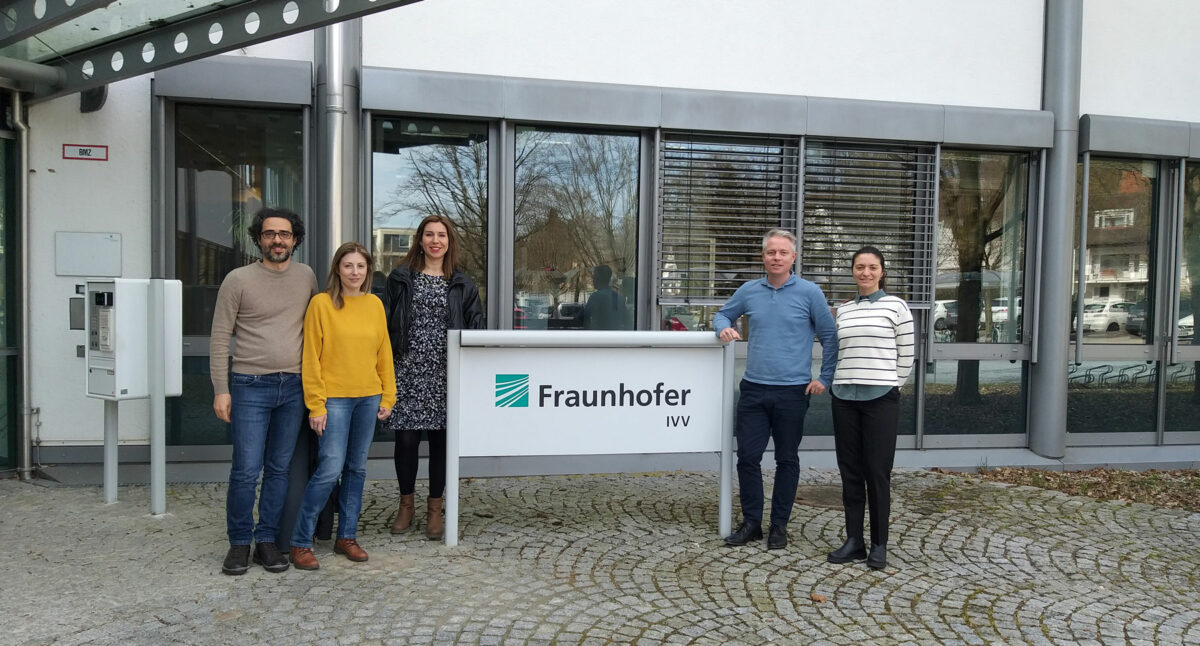
To effectively close the R&I gap and secure long-term scientific independence, the BRIDGE project served as a strategic catalyst for upgrading FORTH’s laboratory capabilities. By transferring best practices from IIT and Fraunhofer IVV, the Ultrafast Laser Micro- and Nano-Processing (ULMNP) group at IESL-FORTH successfully integrated state-of-the-art synthesis, optical characterization, and data tracking tools that remain fully operational beyond the project’s lifetime.
- Advanced Materials Synthesis Platform: The Schlenk Line Technically guided by IIT’s Nanochemistry group, FORTH installed a new multi-port inert gas Schlenk line. This infrastructure upgrade enables the safe utilization of air- and moisture-sensitive precursors, expanding FORTH’s synthetic capabilities toward complex doped perovskites and advanced heterostructures.
- 3-in-1 Optical Characterization: Horiba Duetta Spectrometer FORTH acquired and operationalized a state-of-the-art Duetta spectrometer, combining fluorescence, absorbance, and transmittance measurements in a single unit. Its rapid CCD-based data acquisition vastly improved experimental workflows and data quality for studying perovskite optical kinetics.
- Custom-Designed Modular VOC Gas Sensing Setup Co-developed via iterative engineering feedback with Fraunhofer IVV, a custom low-volume PTFE sensing chamber was constructed and coupled with a high-precision Source Measure Unit (SMU) and a PFA pen socket chamber, establishing a standalone validation line for room-temperature biomarker discrimination.
- Laboratory Digitalization: MaterialsZone ELN Platform Transitioning away from fragmented physical notebooks, the ULMNP lab successfully adopted the MaterialsZone Electronic Lab Notebook platform. This standardized digital framework ensures data traceability, open science compliance, and long-term research reproducibility.